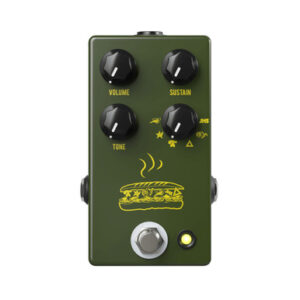

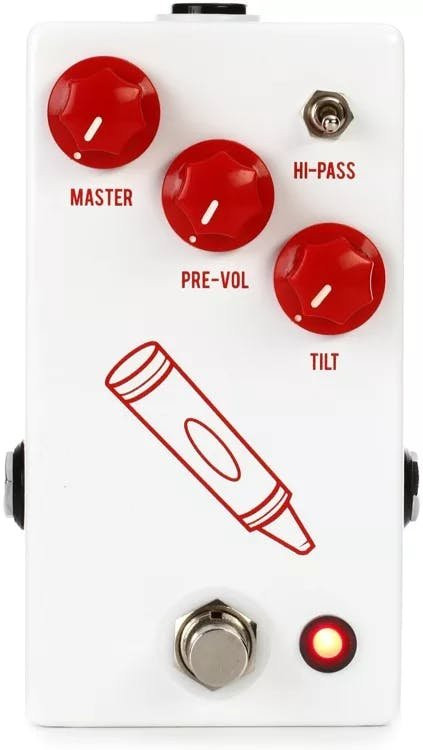
JHS are at it again creating unique and genuinely intuitive guitar pedals. The Crayon is an drive based on the direct distortion/fuzz tones from the JHS Color Box – but in compact form. It certainly sits on the extreme side of fuzz but it does it in the most musical way possible.
Interesting Tone
The Crayon doesn’t base its design off a classic distortion or fuzz circuit. It’s actually inspired by a channel strip from an old British mixing desk from the famous Abbey Road studio. Artists in the late sixties such as the Beatles tapped into their classic guitar tones by running a very hot guitar signal in to one of these desks.
It became an iconic sound now known as ‘direct in distortion’ and while some innovators have made preamps that do this kind of thing, very few guitar pedals have gone down this route.
The Crayon can handle anything from a low gain boost to insane off of the wall sputtering fuzz that reacts incredibly well with your guitars volume control.
Simple Controls
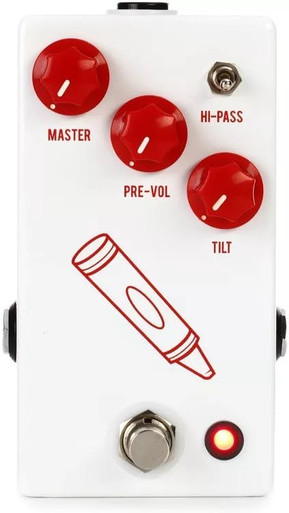
With just three controls, the JHS Crayon may not seem like it can cover a lot of ground at first, but it is a surprisingly versatile piece of kit.
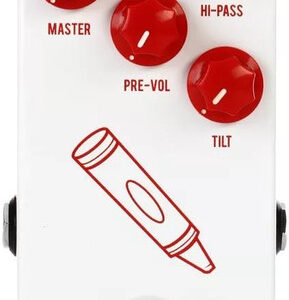
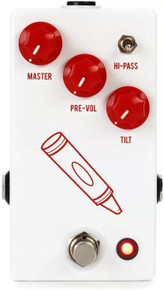
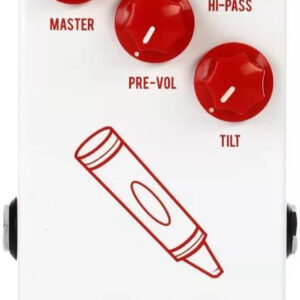
The Pre-Vol is your gain control, when set low you get tube style overdrive. As you turn it up further it gets grungier, fuzzier and dirtier, ending up at a tone that glitches out with the volume and attack of your guitar.
The EQ is an active tone control. At 12 o’clock this control is turned off and doesn’t add or remove any frequencies from the sound. As you turn it clockwise you pile on more treble and cut out bass, while the reverse happens in the counter clockwise position.
You have one extra control, with a high pass filter. This two-way switch sets the high pass filter either at 200Hz or 750Hz to fit your amp and guitars tone so you don’t need to swap out gear just to get that iconic 60’s sound.