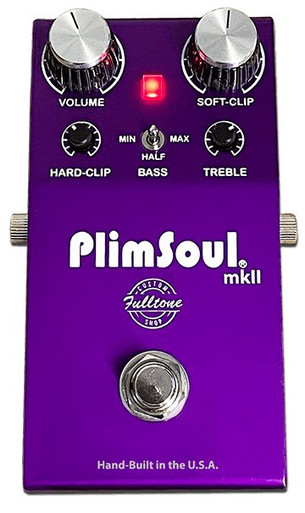
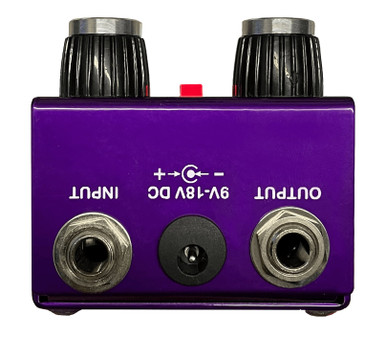
Fulltone Plimsoul Drive Pedal

£229.00

On the Menu for January 2026 are the Fulltone Guitar Pedals. These are fresh in, hand picked by the chef, & cooked to perfection. A tasty number we can deliver straight to your door, serving orders quickly and securely. For more info on Fulltone New Guitar Pedals, please read on for full details, demos, videos, reviews & to order online


Spread the love

Description

Spread the love

The Fulltone Guitar Pedals are fresh in for Jan. The Just Pedals Chef is dishing up hot gear all over the UK, served straight to your door, quickly and securely, For more info on tasty Fulltone New Guitar Pedals, please read on for full details, ingredients, reviews and where to order in the UK.

For many, many years you’ve basically had 2 choices for your Overdrive/Distortion pedals… You could either get “Soft-clipped” Bluesy, slightly compressed, (Toob Screemer, FD2, etc) type Overdrive pedals… or you could get “Hard-Clipped” (OCD, Distortion+, Boss DS-1, etc) type Distortion pedals.

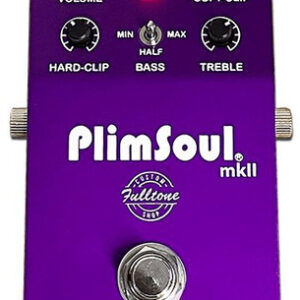
What if there was a pedal that offered both? There is now… the Patent Pending Fulltone PlimSoul

PlimSoul has those Softer Bluesey, Compressed capabilities but also has a Second Stage that you can roll in with the turn of a little dial to add that firmer, crunchier, British output tube style Distortion! What’s more is you not only hear and feel it…you can SEE the pedal reacting to your every mood via a firey LED that glows brighter and dimmer depending on how distorted it is and how hard you’re hitting it.

Clean up with the guitar’s volume control? More than any, yes, even more than the OCD. Speaking of OCD, people ask “What’s the comparison? Easy answer: OCD has an honest flat EQ, won’t change your amp’s tone. PlimSoul has a gorgeous enhanced Midrange and Lower midrange…excellent to transform a combo into a Marhall-like Lead machine, not so necessary if you already have a Marshall-like amp. I use PlimSoul on any combo, I use my OCD on both Combos and larger Marshall-style amps/cabinets.

FAQ

  • Good with Humbuckers as well as Single coils? Yep.
  • Does it play nice with other pedals? Yes, it has an Ideal 500K Input Impedance, ideal super low 10K output impedance.
  • How dirty does it get? VERY dirty, the dirtiest pedal I make…but gets very clean as well.
  • Can I blend the 2 types of Distortion? Yes, and you can have ONLY Soft clipped or ONLY Hard Clipped 🙂

In a Nutshell? Extremely good Sustain/Feedback qualities, just the right amount of Mids, bottom, Great touch sensitivity, dynamics, and all those in-between shades available when you know how to use your guitar’s volume control.

I guess i should be flattered, I’m already starting to see pedal builders taking notice and “getting inspired” by the PlimSoul’s unique design, which combines independently adjustable soft & hard clipping and successfully emulates the “sag” and other behaviours associated with a tube amp’s output section and tube rectifier.

With the OCD, I gooped the pcb for 5 years or so to slow them down, but you’re now seeing a handful of “OCD inspired” pedals being sold under various names. Now I’m seeing photoshop renderings popping up from other makers claiming to be developing “emulates output tube distortion” pedals ala Plimsoul. I didn’t bother gooping the PlimSoul, but we are well into the Patent process 🙂

What Fulltone say about the Plimsoul Drive Pedal:

For many, many years you’ve basically had 2 choices for your Overdrive/Distortion pedals: You could either get “Soft-clipped” Bluesy, slightly compressed, (Toob Screemer, FD2, etc.) type Overdrive pedals… or you could get “Hard-Clipped” (OCD, Distortion+, Boss DS-1, etc.) type Distortion pedals.

What if there was a pedal that offered both? There is now… the Fulltone PlimSoul with it’s Patented (US Patent#8471136) and completely unique dual stage clipping circuit which VERY accurately replicates not only the sound, but *the feel *of a tube amp with all of its subtleties and complexities.

PlimSoul has those Softer Bluesey, Compressed capabilities but also has a Second Stage that you can roll in with the turn of a little dial to add that firmer, crunchier, British output tube style Distortion! What’s more is you not only hear and feel it… you can SEE the pedal reacting to your every mood via a firey LED that glows brighter and dimmer depending on how distorted it is and how hard you’re hitting it.

Touch sensitive? Doesn’t get any better.

Clean up with the guitar’s volume control? More than any, yes, even more than the OCD.

Speaking of OCD, people ask “What’s the comparison?” Easy answer: OCD has an honest flat EQ, won’t change your amp’s tone. PlimSoul has a gorgeous enhanced Midrange and Lower midrange… excellent to transform a combo into a Marshall-like lead machine, not so necessary if you already have a Marshall-like amp. I use PlimSoul on any combo, I use my OCD on both combos and larger Marshall-style amps/cabinets.

Good with Humbuckers as well as Single coils? Yep.

Does it play nice with other pedals? Yes, it has an Ideal 500K Input Impedance, ideal super low 10K output impedance.

Can I blend the 2 types of Distortion? Yes, and you can have ONLY Soft clipped or ONLY Hard Clipped 🙂

In a Nutshell? Extremely good Sustain/Feedback qualities, just the right amount of Mids, bottom, Great touch sensitivity, dynamics, and all those in-between shades available when you know how to use your guitar’s volume control. I guess I should be flattered, I’m already starting to see pedal builders taking notice and “getting inspired” by the PlimSoul’s unique design, which combines independently adjustable soft & hard clipping and successfully emulates the “sag” and other behaviors associated with a tube amp’s output section and tube rectifier. With the OCD, I gooped the pcb for 5 years or so to slow them down, but you’re now seeing a handful of “OCD inspired” pedals being sold under various names. Now I’m seeing Photoshop renderings popping up from other makers claiming to be developing “emulates output tube distortion” pedals ala Plimsoul. I didn’t bother gooping the PlimSoul, but we are well into the Patent process.
Ingredient Allergy Warning : Product may contain nuts.

Additional information

Weight 0.5 kg

Brand

Fulltone

Fulltone is a boutique guitar effects pedal manufacturer known for its high-quality, hand-built pedals designed to replicate vintage tones while incorporating modern features and reliability. Founded by musician and engineer Michael Fuller in 1991, Fulltone initially gained recognition with its flagship product, the Full-Drive overdrive pedal, which offered players a versatile range of overdriven tones inspired by classic tube amplifiers.

Since then, Fulltone has expanded its product line to include a variety of effects pedals such as fuzz, distortion, delay, modulation, and more. Each Fulltone pedal is meticulously crafted using top-quality components and circuit designs, resulting in pedals that are celebrated for their rich sound, responsiveness, and durability. Notable offerings include the OCD (Obsessive Compulsive Drive) overdrive/distortion pedal, the ’69 fuzz, and the TTE (Tube Tape Echo) tape echo emulator.

Fulltone’s commitment to excellence and its dedication to preserving the sonic legacy of vintage gear have made it a favorite among discerning guitarists and musicians seeking premium effects pedals. With a reputation for delivering exceptional tone and craftsmanship, Fulltone continues to be a prominent player in the boutique pedal market.

Category

Guitar Pedals

Tags

Distortion

Distortion pedals take your clean guitar signal and transform it into something bigger, bolder, and full of attitude. By clipping the waveform, they add sustain, bite, and aggression, creating that thick, compressed tone that’s powered rock music for decades. From the growling crunch of classic hard rock to the tight, saturated roar of modern metal, distortion is all about energy and presence. It gives every note weight and authority, pushing your amp to its limits and beyond.

There are countless flavours of distortion, each with its own texture and edge. Some sound smooth and creamy, others raw and gnarly like tearing fabric. It’s the sonic equivalent of turning up the heat until the sound cooks — rich, sizzling, and perfectly seasoned to taste. Whether used for rhythm muscle or soaring leads, a good distortion pedal doesn’t just add volume; it adds personality, grit, and that unmistakable sense of power under your fingers.

EQ

While Ed Sheeran primarily relies on the natural sound of his acoustic guitar and vocals, he occasionally uses EQ (Equalization) to shape and enhance his tone during live performances or in the studio. EQ pedals or onboard preamps can allow him to adjust the frequency response of his guitar signal to suit the acoustics of different venues or to achieve specific tonal characteristics. Here’s how EQ might be utilized in Ed Sheeran’s setup:

1. **Tonal Shaping**: EQ can be used to adjust the balance of frequencies in the guitar signal, allowing Ed Sheeran to shape his tone to his liking. For example, he might boost the midrange frequencies to bring out the warmth and presence of his acoustic guitar, or cut certain frequencies to reduce any harshness or mud in the sound.

2. **Feedback Control**: In a live setting, EQ can help control feedback by notching out problematic frequencies that might cause the guitar signal to feed back through the amplification system. This can be particularly useful when performing in venues with challenging acoustics or high volume levels.

3. **Room Correction**: In situations where the venue’s acoustics are less than ideal, EQ can be used to compensate for any deficiencies in the sound. By adjusting the EQ settings, Ed Sheeran can tailor the guitar tone to sound more balanced and natural, regardless of the room’s acoustic properties.

4. **Matching Gear**: EQ can also be used to match the tone of Ed Sheeran’s guitar to the sound of other instruments or equipment in his setup. For example, he might adjust the EQ to complement the tonal characteristics of his vocal microphone or to blend seamlessly with backing tracks or other instruments.

Overall, while EQ may not be a central component of Ed Sheeran’s guitar effects setup, it can still play a valuable role in shaping his tone and ensuring that he achieves the desired sound in different performance environments. Whether used subtly for tonal shaping or more aggressively for feedback control, EQ allows Ed Sheeran to tailor his guitar tone to suit his musical vision and performance needs.

Guitar Pedals

Your pedal is like a signature dish for your sound — a flavour-packed creation that transforms the bland ingredients of your guitar into something unforgettable. Each one adds its own seasoning, texture, and heat, turning a simple meal into a feast of tone.

These tasty little boxes sit in a row, like plates on a buffet, letting you mix and match flavours as you play. With one tap of your foot, you can swap sweet for spicy, subtle for smoky, and serve up something completely new. From the comfort food of warm overdrive to the fiery kick of fuzz, from smooth jazz sauce to heavy-metal spice, pedals give players a full menu of options to express their taste.  And just like with food, once you’ve tried one dish, you’ll want to sample them all.

Collecting, trading, and discovering new flavours soon becomes part of the joy of being a tone-loving gourmet geek with a guitar.

New

This is brand new, fresh in, and a UK warranty is included. New Gear always comes from trusted UK music retailers.

Overdrive

Like a golden layer of melted cheese — warm, gooey, and just put it all over. It adds just the right amount of richness and grit, turning a clean signal into something smooth and savoury. Designed to mimic the natural breakup of a tube amp pushed to its sweet spot, overdrive delivers the flavour of classic rock and blues in every bite. From creamy mid-gain warmth to crisp edge-of-breakup sparkle, it’s the comfort food of guitar tone — simple, satisfying, and endlessly versatile. Whether it’s a mild crunch or a full-bodied roar, overdrive is where good taste begins.

Volume

Volume pedals control the output level of a guitar signal using a foot-operated treadle. They allow smooth volume swells, dynamic control during playing, and easy muting between songs. Volume pedals can be placed at different points in the signal chain to either control overall loudness or adjust gain and drive behaviour when positioned before distortion or overdrive pedals.

Available for Amazon Prime