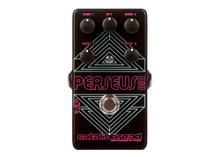
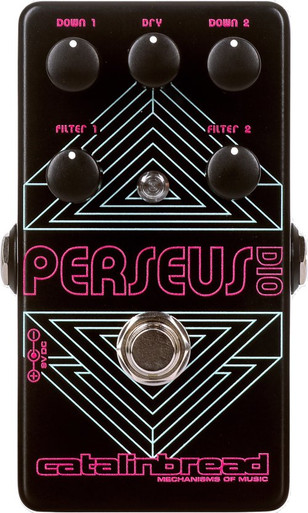
Catalinbread Perseus DIO Synth Sub-Octave Fuzz Pedal

£149.99

On the Menu for January 2026 are the Catalinbread Guitar Pedals. These are fresh in, hand picked by the chef, & cooked to perfection. A tasty number we can deliver straight to your door, serving orders quickly and securely. For more info on Catalinbread New Guitar Pedals, please read on for full details, demos, videos, reviews & to order online


Spread the love

Description

Spread the love

The Catalinbread Guitar Pedals are fresh in for Jan. The Just Pedals Chef is dishing up hot gear all over the UK, served straight to your door, quickly and securely, For more info on tasty Catalinbread New Guitar Pedals, please read on for full details, ingredients, reviews and where to order in the UK.

Often overlooked, all analogue fuzz sub-octave pedals have to be one of the coolest effects ever invented…turn any single-line melody into a gargantuan wall of riffy carnage with just a click of a button and some knob tweaking. It’s a perfect recipe for awesome! The Catalinbread Perseus Dio is no exception. Taking off from where their original Perseus pedal left off the Perseus Dio ups the ante by giving you the ability to blend in an additional octave and filter for even more synth-like chaos!

Here’s what Catalinbread say about the Perseus Dio

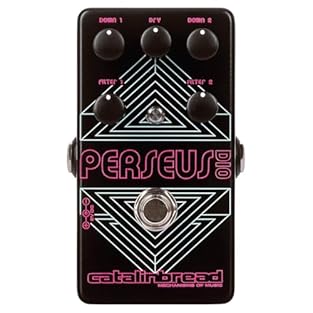
What kind of octave-down boxes do you like? For most of us, there are two answers: Beefy video-gamey square waves dripping with harmonics, and clean octaves that serve to compliment one’s tone and fill out the low end. For some reason, you normally get one or the other. Not this time! The Perseus Dio gives you a three-channel mixer for your dry signal, one octave down and two octaves down, along with heavy-duty low-pass filters for each octave channel. Mix in your ideal volume levels for each channel as you see fit, then transform them from blistering square waves to complimentary octaves with the twist of a knob. Mix in some dry signal for a three-voice onslaught, remove it for some low-end thump, or just use the Dry knob alone for some pleasing light distortion that has more than enough volume to push any amplifier.

Overview

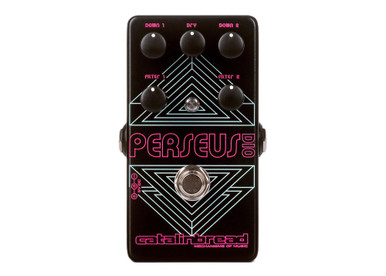
Fewer things give guitarists that fabled “riff face” more than a fuzz mixed with an analog octave down, and our original Perseus was a trailblazer in that regard. With that said, the Perseus Dio is a rightful successor to that box. The Perseus Dio greatly expands on the concept of our original device, giving you a three-voice all-analog octave down device with adjustable octave filters. Three knobs control the mixer section, giving you one octave down, two octaves down, and a dry, boosted distortion. The Dry knob gives you a really great light distortion sound that’s more than capable of pushing your amp into overdrive, but the fun starts when you control the levels of octave down signals with their accompanying low-pass filters. With no filtering, the octaves are harmonically rich square waves that sound like old-school Nintendo, but turning up their accompanying filter knobs smooth out the harmonics and turn into clean octaves down. Let’s get pixelated.

Controls

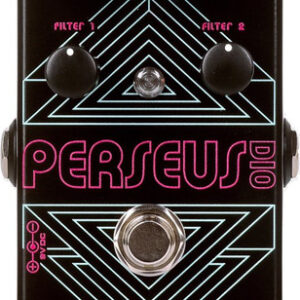
  • DOWN 1: Controls the volume level of the 1-octave-down signal. Both this and the 2 Down control have been tuned to provide the best possible tracking across all positions on the fretboard.
  • FILTER 1: This control governs the cutoff point for a second-order low-pass filter on the 1 Down knob. At minimum, the cutoff point is ~7KHz, retaining all the harmonic richness and video game-esque qualities. At maximum, the cutoff point is ~280Hz, giving you a clean octave down with bubbling harmonics lying underneath.
  • DOWN 2: Just like Down 1, Down 2 controls the level of the 2-octave-down signal.
  • FILTER 2: This control governs the cutoff point for a deeper second-order low-pass filter on the Down 2 knob. At minimum, the cutoff point is ~7KHz, just like “1 Filter.” However, at maximum, the cutoff point is ~140Hz to really let the “oomph” shine through at higher settings.
  • DRY: This knob controls the volume of the dry signal. It is not your true clean guitar signal, but rather a boosted version of it, allowing it to mix better with the octaves. There’s plenty of volume on tap and it sounds great just by itself.

Power Supply

You can power your Perseus DIO with any 9VDC quality power supply designed for use with effects pedals.
Ingredient Allergy Warning : Product may contain nuts.

Additional information

Weight 0.5 kg

Brand

Catalinbread

Catalinbread is a renowned boutique pedal company based in Portland, Oregon, USA. Founded in 2003 by Nicholas Harris and Howard Gee, Catalinbread has established itself as a leading manufacturer of high-quality and innovative guitar effects pedals.

Catalinbread pedals are crafted with a deep respect for vintage tone and a flair for innovation. Hand-built in Portland, Oregon, they capture the spirit of classic amps, echoes, and fuzz circuits while adding modern versatility and character. Each pedal feels like a piece of sonic art, from their shimmering reverbs to their amp-inspired drives and dynamic boosts. Catalinbread’s approach is all about musical feel and responsiveness, giving players inspiring tools that make every note come alive.

Category

Guitar Pedals

Tags

Distortion

Distortion pedals take your clean guitar signal and transform it into something bigger, bolder, and full of attitude. By clipping the waveform, they add sustain, bite, and aggression, creating that thick, compressed tone that’s powered rock music for decades. From the growling crunch of classic hard rock to the tight, saturated roar of modern metal, distortion is all about energy and presence. It gives every note weight and authority, pushing your amp to its limits and beyond.

There are countless flavours of distortion, each with its own texture and edge. Some sound smooth and creamy, others raw and gnarly like tearing fabric. It’s the sonic equivalent of turning up the heat until the sound cooks — rich, sizzling, and perfectly seasoned to taste. Whether used for rhythm muscle or soaring leads, a good distortion pedal doesn’t just add volume; it adds personality, grit, and that unmistakable sense of power under your fingers.

Filter

Fuzz

A fuzz pedal is one of the earliest and most aggressive forms of distortion, turning your clean guitar signal into a thick, saturated wall of sound. It works by clipping the waveform almost flat, creating a compressed, gritty tone full of harmonic overtones. The result is raw, unruly, and unmistakable — from the sputtering breakup of vintage germanium circuits to the searing sustain of modern silicon designs. Fuzz pedals react strongly to your guitar’s volume and pickup choice, making them dynamic tools for expressive players.

Whether you’re chasing the classic tones of Hendrix and the Smashing Pumpkins or exploring heavy, experimental textures, fuzz remains a favourite for its personality and unpredictability. It can sound smooth and sustaining, or wild and velcro-like, depending on how it’s set up. A good fuzz pedal cuts through the mix while adding thickness and attitude, turning any riff or lead line into something bold and unmistakably alive.

Guitar Pedals

Your pedal is like a signature dish for your sound — a flavour-packed creation that transforms the bland ingredients of your guitar into something unforgettable. Each one adds its own seasoning, texture, and heat, turning a simple meal into a feast of tone.

These tasty little boxes sit in a row, like plates on a buffet, letting you mix and match flavours as you play. With one tap of your foot, you can swap sweet for spicy, subtle for smoky, and serve up something completely new. From the comfort food of warm overdrive to the fiery kick of fuzz, from smooth jazz sauce to heavy-metal spice, pedals give players a full menu of options to express their taste.  And just like with food, once you’ve tried one dish, you’ll want to sample them all.

Collecting, trading, and discovering new flavours soon becomes part of the joy of being a tone-loving gourmet geek with a guitar.

New

This is brand new, fresh in, and a UK warranty is included. New Gear always comes from trusted UK music retailers.

Octave

An octave pedal shifts your guitar signal up or down by one or more octaves, blending the altered pitch with your original sound to create a fuller, more complex tone. It can add a deep, bass-like layer underneath your playing or a shimmering high octave on top for lead lines and solos. Classic analogue octave pedals often produce slightly gritty, organic sounds, while modern digital versions track more precisely and can offer multiple octave ranges.

Octave pedals are great for thickening single-note riffs, creating synth-style textures, or even mimicking bass parts when playing alone. They pair well with fuzz or overdrive pedals for massive, harmonically rich tones. Whether you’re after vintage Hendrix-style octave fuzz or a modern polyphonic sound that tracks chords cleanly, an octave pedal opens up a world of creative possibilities and adds real weight and character to your tone.

Overdrive

Like a golden layer of melted cheese — warm, gooey, and just put it all over. It adds just the right amount of richness and grit, turning a clean signal into something smooth and savoury. Designed to mimic the natural breakup of a tube amp pushed to its sweet spot, overdrive delivers the flavour of classic rock and blues in every bite. From creamy mid-gain warmth to crisp edge-of-breakup sparkle, it’s the comfort food of guitar tone — simple, satisfying, and endlessly versatile. Whether it’s a mild crunch or a full-bodied roar, overdrive is where good taste begins.

Synth

A synth pedal transforms your guitar signal into rich, layered tones that mimic the sounds of a synthesiser. Using pitch tracking and waveform generation, it can produce everything from deep bass lines to shimmering pads and futuristic leads. Synth pedals open up a wide creative range, blending the expressiveness of guitar playing with electronic textures, making them ideal for experimental sounds, ambient music, or adding a modern edge to classic riffs.

Volume

Volume pedals control the output level of a guitar signal using a foot-operated treadle. They allow smooth volume swells, dynamic control during playing, and easy muting between songs. Volume pedals can be placed at different points in the signal chain to either control overall loudness or adjust gain and drive behaviour when positioned before distortion or overdrive pedals.