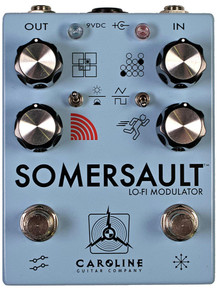


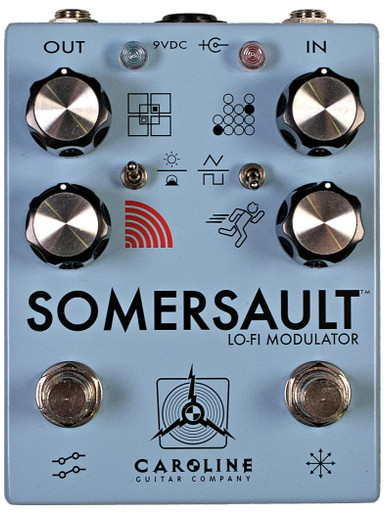
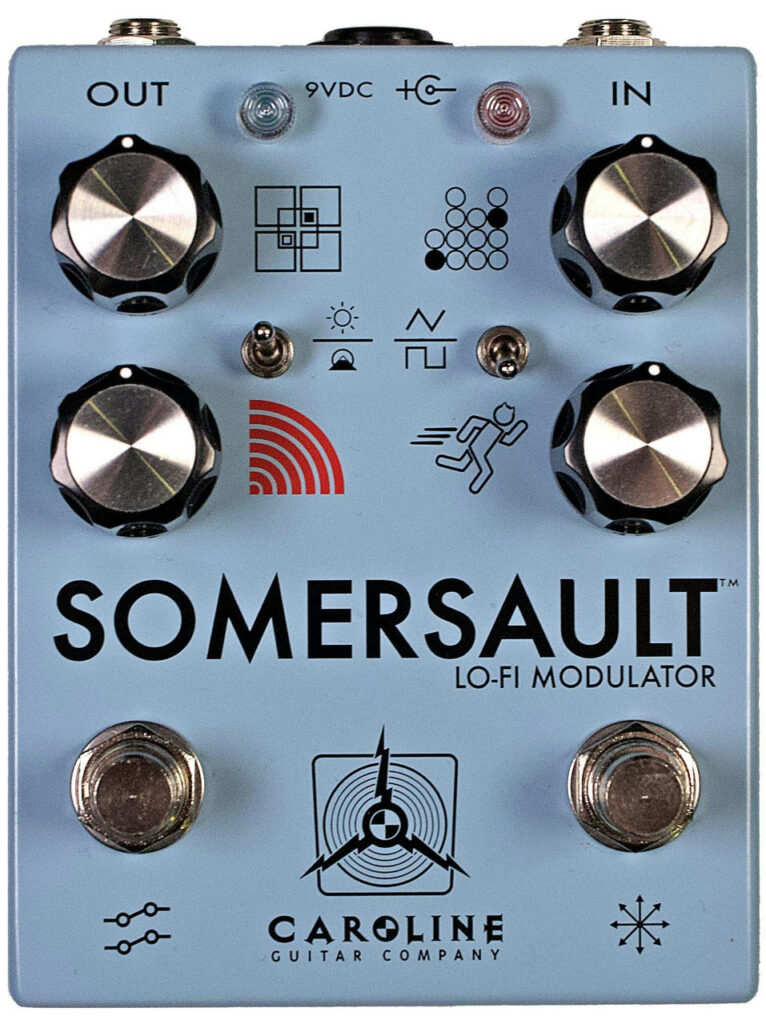


Caroline Guitar Company Somersault Chorus Pedal

£239.00

This is a New Caroline Guitar Company Somersault Chorus Pedal from Caroline Guitar Company, listed in Chorus Pedals on Just Pedals. Read More below.

View Just
more
and ,

Here's what Caroline Guitar Company say about the Somersault:

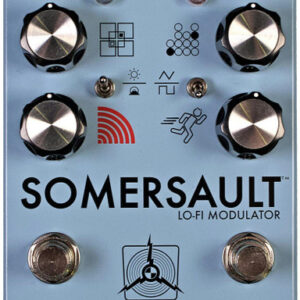
This one sparks joy! Our SOMERSAULT is the chorus-y/vibrato-y/faux-rotary device our customers have asked us to make for years. So now it’s time.

From seasick wobbles to glitchy bleep-bloops and “I think I can” huffs and puffs, the crazy sounding stuff was actually the easy part for us. So once you’re done maxing out different settings to hear what kinds of bizarre wowie-zowie sounds you can make with this thing, we encourage you to explore the subtleties of how each control interacts with the others, and the remarkable range of sounds that you can quickly and intuitively dial in. Gentle, lagging vibrato, 1980s style choruses, and even some doubling effects are possible…and then, turn up & go wild again.

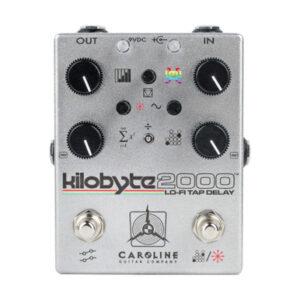
SOMERSAULT applies a similar framework as our popular KILOBYTE and MÉTÉORE pedals. While the digital chip sets the delayed wet signal, the initial gain stage, dry signal, LFO, control set and output mixing stage are entirely analog. The end result sounds rich and fat, with the same robust feel and power our customers have come to expect from our work.
Brand

Caroline Guitar Company

In the current JustPedals catalogue, Caroline Guitar Company is represented by Fuzz Pedals, Chorus Pedals and Octave Pedals. Current listings include Meteore, Kilobyte and Somersault Chorus. That makes the range relevant to players looking for drive, gain and clipping, plus time-based effects and ambience. Check each model for its exact circuit or processing platform, controls, power requirements and connections, particularly where the catalogue includes both pedals and supporting gear.

Category

Chorus Pedals

Chorus pedals mix the dry signal with one or more short, modulated delays to create movement, width and gentle pitch variation. Rate controls the speed of the modulation; depth controls its excursion; blend, tone and stereo routing determine how prominent the effect becomes. Slower, shallow settings can add width without obscuring the note, while deeper settings move towards a seasick or synthetic wobble. Analogue bucket-brigade and digital designs can behave differently, so check mono compatibility, headroom and the placement of the pedal after drives or before a mixer.

Tags

Analogue

Analogue products use continuous audio circuitry for some or all of the signal path, so clipping, filtering or modulation arises from physical components rather than sampled algorithms. The label does not guarantee a particular tone; component choice, headroom, bias, noise and the surrounding gain stages still matter. Check whether the switching, presets, control section or cabinet stage is digital when the exact signal path is important.

Digital

Digital products use conversion and processing to create, store or control the effect. This can provide presets, complex routing, repeatable algorithms, USB, MIDI and firmware features, but conversion, latency, power requirements and clocking depend on the design. Check the input and output levels, sample or impulse-response support, bypass behaviour and current draw when combining a digital unit with analogue pedals or a direct recording setup.