
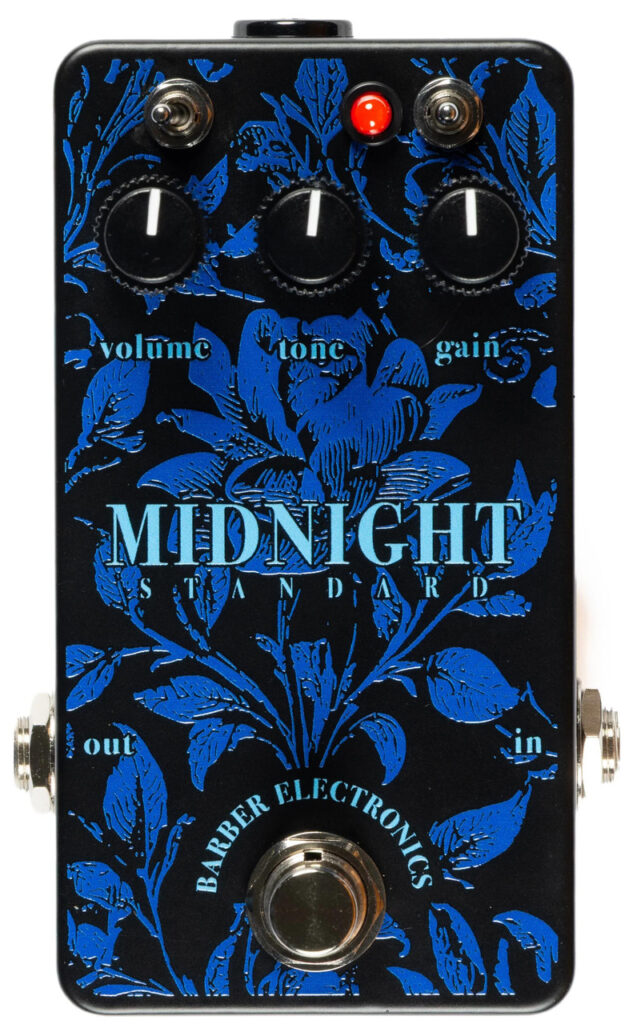



The Barber Electronics Midnight Standard is a refined take on the classic Bluesbreaker-style overdrive, designed to work effortlessly with everything from low-output single coils to hot humbuckers. With expanded gain, powerful yet musical tone shaping and two intuitive toggle switches, it delivers everything from open, edge-of-breakup chime to rich, harmonically complex drive, while staying touch-sensitive and responsive under the fingers. At its heart, the Midnight Standard keeps the simple, two-stage overdrive architecture that made the original circuit so beloved. Instead of piling on extra EQ stages or output boosters, Barber have focused on widening the usable range of the controls and adding smart voicing options that keep your sound cohesive at any gain level. The result is an overdrive that feels immediate and dynamic, with a clear sense of connection between your hands and the amp. The redesigned Gain control is the star of the show, gliding smoothly from articulate low gain into thicker, more sustaining textures with added harmonic content. Crucially, it does this without losing note definition or your guitar’s natural character. The Tone control has also been opened up, offering extra sweetness and chime at the top end while still being able to dial in throatier, more mid-focused voices when you need them to cut through a mix. Two three-way toggles give you fast access to a wide palette of sounds. The Body switch lets you choose between classic tightness, deeper low-end authority, or a pronounced low-mid growl with a distinctly British flavour. The Compression switch reshapes the clipping response, from wide-open dynamics to a more connected, refined feel that keeps higher gain settings and hotter pickups sounding focused rather than fizzy. Classic Circuit, Modern Flexibility The Midnight Standard keeps the original Bluesbreaker-style signal path intact, preserving the immediacy and detail that players love. Instead of complicating the design, Barber have enhanced the core behaviour of the circuit, so you get a familiar feel with far greater flexibility. It is an ideal choice if you want a classic voice that can comfortably cover low, medium and pushed drive sounds without needing multiple pedals. Optimised for Any Pickup Where many classic circuits tend to favour single coils, the Midnight Standard is carefully tuned to stay cohesive with humbuckers, P-90s and other higher-output pickups. The expanded Gain range and Compression toggle work together to keep your sound balanced and musical, whether you are running vintage-style single coils or modern, hotter designs. That means less time fighting your rig and more time enjoying consistent, inspiring tones. Expressive, Touch-Sensitive Gain From subtle edge-of-breakup to rich, singing overdrive, the Gain control responds beautifully to your picking dynamics and guitar volume. Play softly and it stays open and articulate; dig in and it thickens up with extra sustain and harmonic complexity. This makes the Midnight Standard a superb always-on pedal, reacting naturally to your playing rather than forcing you into a single fixed level of drive. Smart Voicing and Compression Controls The Body and Compression toggles give you three distinct options each, letting you quickly tailor the low-end response and clipping feel to your guitar and amp. Tight, Deep or Thick body settings cover everything from focused rhythm work to weighty, low-end punch, while Stock, Push and Toasty compression modes fine-tune how the pedal reacts at different gain levels. It is a fast, intuitive way to dial in the perfect feel on any stage or session.Key Features Expanded Gain Range – The redesigned Gain control moves from open, low-gain sparkle through to thicker, more sustaining overdrive with enhanced harmonic content. This wider range makes the Midnight Standard equally at home as a subtle tone enhancer or a primary drive sound, reducing the need for multiple overdrive pedals on your board.…



Barber Electronics Midnight Standard Overdrive Pedal
This is a New Barber Electronics Midnight Standard Overdrive Pedal from Barber Electronics its found in our Overdrive Pedals on the Just Pedals menu. Read More below.
As an affiliate partner, we may earn a small commission when you buy through our links — at no extra cost to you.
Brand
Barber Electronics
In the current JustPedals catalogue, Barber Electronics is represented by Fuzz Pedals, Overdrive Pedals and Compressor Pedals. Current listings include Linden EQ, Direct Drive and Exacta Vintage Fuzz. That makes the range relevant to players looking for drive, gain and clipping. Check each model for its exact circuit or processing platform, controls, power requirements and connections, particularly where the catalogue includes both pedals and supporting gear.
Category
Overdrive Pedals
Overdrive uses soft or moderate clipping to add harmonics and compression while retaining more of the original note shape than heavy distortion. Some circuits emphasise the midrange and trim bass before clipping; others remain broad, transparent or amplifier-like. Gain, clipping arrangement, headroom and tone filtering decide whether it supplies a light edge, a saturated drive sound or extra push into another gain stage.
Others Just Ordered :
- I Love A Happy Accident… – Animals Pedal

- Animals Pedal Vintage Van Driving is Very Fun Overdrive

- Animals Pedal Sunday Afternoon Is Infinity Bender

- Ninevolt Pedals | Bath Time Reverb (Animals Pedal)

- This Fuzz Pedal Makes No Sense… But It Sounds Incredible

- ANIME Pedals | Animals Pedal Custom Illustrated Series
