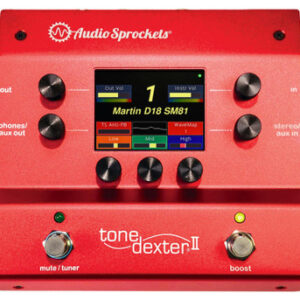
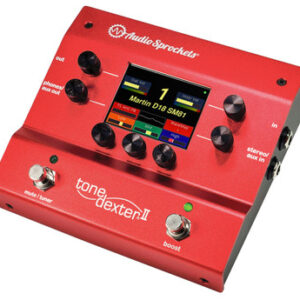

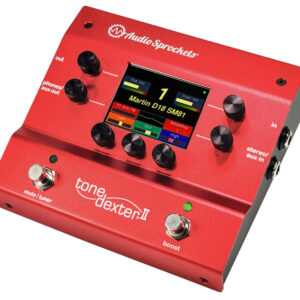
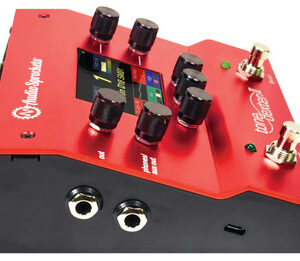
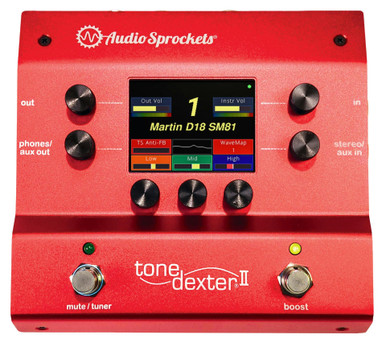
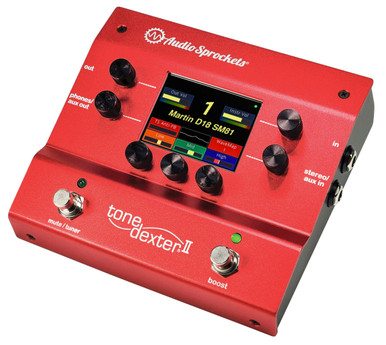
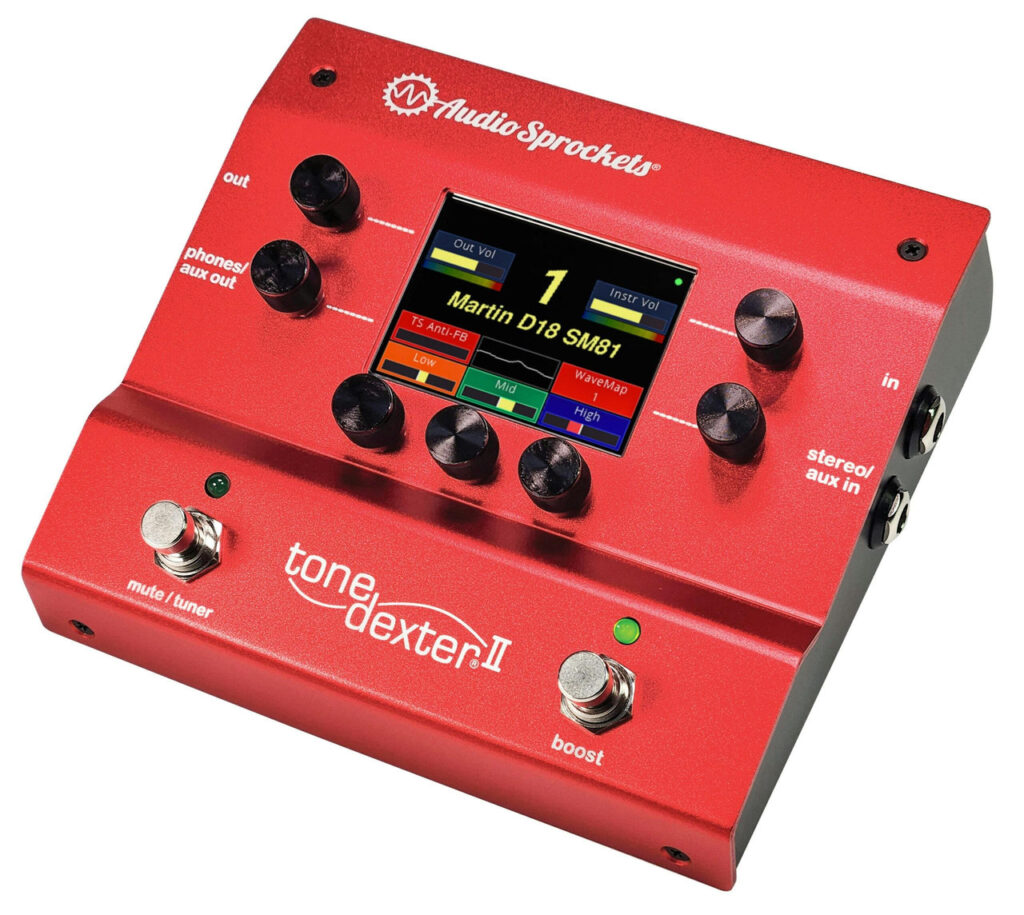
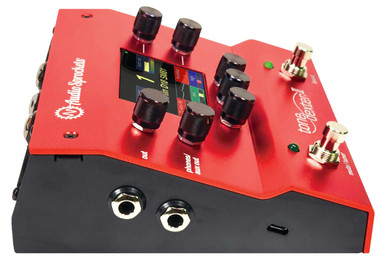
The ToneDexter II is an innovative high-end preamp that improves the sound of an acoustic instrument pickup.
It can learn the difference between how an instrument sounds through a microphone and how it sounds through its pickup. Using the revolutionary WaveMap technology, it corrects the pickup so that it sounds like the microphone.
Key Features
- Simple to use Colour Display – The uncluttered & colour coded display makes it easy to control your settings.
- Built-in Tuner & Boost – There is a built in Tuner and a Boost switch for selecting extra gain for solos. You can EQ the sound and apply a notch filter to deal with any feedback issues.
- Connectivity – The ToneDexter II plugs into many different gear types, making it an essential piece of gear in your setup, to deliver your true tonal quality.
Playing
Plug your pickup into the ToneDexter II and the output to the PA or your acoustic instrument amp, select a WaveMap sound and play. Your live pickup sound will match your studio mic.
Studio Sound Combined with the Convenience of a Piezo Pickup
ToneDexter II restores the rich body tone of your acoustic instrument to the pickup using proprietary digital signal processing technology combined with a pristine analog signal path.
Once you have stored your mic sound into ToneDexter II, simply plug in your instrument and play.
Specifications
Instrument Input
- 1/4” phone jack
- Input impedance: 1MΩ if using a standard mono plug, 10MΩ if using a TRS plug with RING unconnected
- Gain range: -38dB to +25dB
Aux Input
- 1/4” TRS phone jack
- Left or Right channel:
- Input impedance: 1MΩ
- Gain range: -38dB to +25dB
- Right channel:
- Switchable +9V bias through 10K resistor
Mic Input
- XLR female
- Input impedance: 2KΩ differential
- Gain range: -11dB to +49dB
- Switchable +48V phantom power
Main Output
- 1/4” TRS phone jack
- Unbalanced single ended, or impedance balanced differential drive
- Source impedance: 300Ω per side
- Gain range: -34dB to +14dB
DI Output
- 1/4” TRS phone jack
- Voltage and impedance balanced differential drive
- Source impedance: 300Ω per side
- Gain range: -28dB to +20dB
Aux Output
- 1/4” TRS phone jack
- Dual mono or stereo operation, capable of driving most headphones
- Source impedance: 20Ω per side
- Gain range: -22dB to +26dB
FX Sends
- 1/4” TRS phone jack
- Dual mono or stereo operation
- Source impedance: 500Ω per side
FX Returns
- 1/4” TRS phone jack
- Dual mono or stereo operation
- Input impedance: 1MΩ per side
USB Jack
- USB 2.0
- Micro B
DC Power Input
- 2mm pin, 5.5mm barrel
- Accepts 9-15VDC, either polarity
- Requires 8W minimum startup, 6W continuous.
Control Jack
- 1/4” TRS phone jack
- If Midi selected, wired to the TRS midi standard
- If footswitch is selected, Tip and Ring are pulled up to +5V with a 20mA current source
- Footswitches should make momentary closure to ground.
On Board Footswitches
- Optical interrupter sensors for zero wear operation