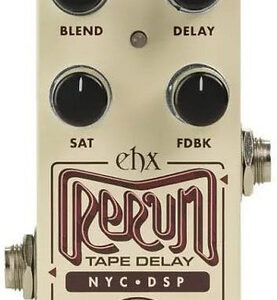
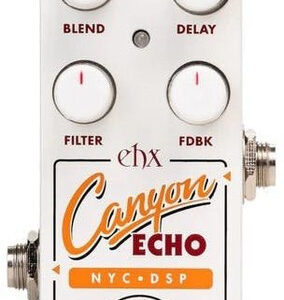
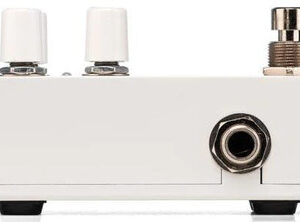
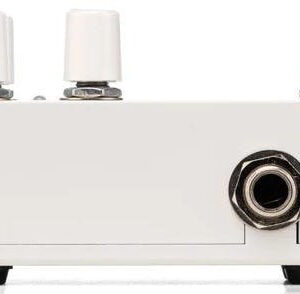
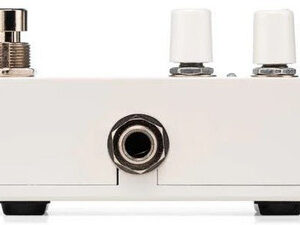
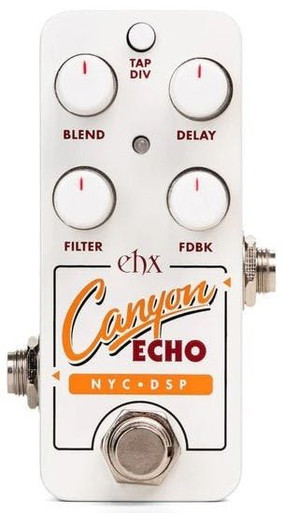
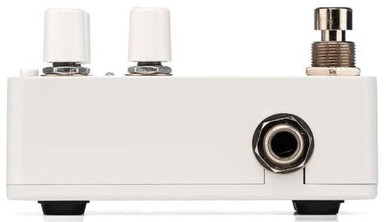
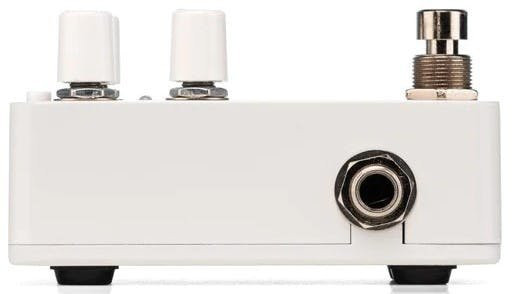
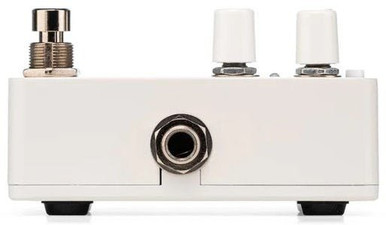
Electro Harmonix Pico Canyon Echo Delay Mini Pedal

£99.99

This is a New Electro Harmonix Pico Canyon Echo Delay Mini Pedal from Electro Harmonix, listed in Delay Pedals on Just Pedals. Read More below.

View Just
more
and ,

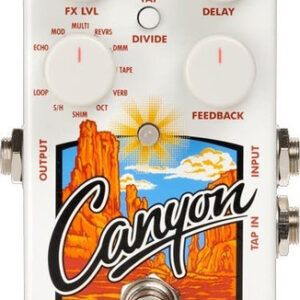
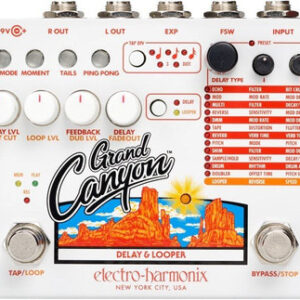
Taking the digital circuitry and delay from the successful Canyon Delay and Looper by Electro Harmonix, the Pico Canyon Echo Delay packs it all into one compact unit. Don’t let the size of this pedal detract from its mightiness. The crystal-clear delay gives you the ability to simply add filtering, change the tempo with the tap function, and add feedback with the adjustable knob to add subtle, yet powerful echo to bend time.

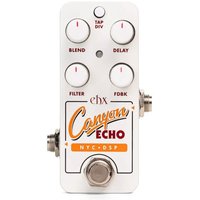
Featuring a Blend knob, you can create a wet and dry signal mix to expand your tonal horizons. The Delay knob sets the delay time from 8ms to 3s. The Feedback knob allows you to adjust from 1 repeat to an infinite number of repeats for expansive whooshes of highs and lows. By turning the Filter knob up for a high pass filter, and then down for a low pass filter. This compact pedal gives you a magnitude of sonic delay options in one simple and easy to use unit.

Key Features

  • Compact and Powerful – Based off the Electro Harmonix’s original Delay pedal, the Pico presents all the great time warping features in one compact pedal that fits neatly on your pedal board.
  • Easy To Use – With only four controls, this tiny stompbox is easy to use to be able to give you the best tonal experience possible, opening you up to a massive variety in tone.
  • Selectable Tails Bypass – Allows for echoes to continue and be repeated after the pedal is bypassed to gives you a subtle delay.

Specifications

  • Circuit: Digital
  • Bypass: Buffered Bypass
  • Audio: Mono
  • Power Supply: 9.6VDC-200mA Power Adapter
  • Dimensions: 3.65” x 2.0” x 2.0”
  • Current Draw: 100mA

Related videos

Brand

Electro Harmonix

Electro-Harmonix (EHX) is a legendary manufacturer of guitar pedals and audio electronics, renowned for their distinctive sound and pioneering designs. Established in 1968 by Mike Matthews, EHX has played a significant role in shaping the landscape of effects pedals. The company’s pedals are celebrated for their innovative circuits and unique tones, earning them a dedicated following among musicians across genres. From classics like the Big Muff Pi fuzz to modern favorites like the POG octave generator, Electro-Harmonix pedals are known for their versatility and sonic character.

EHX’s product lineup spans a wide range of effects categories, including distortion, modulation, delay, and reverb, among others. Their pedals often feature intuitive controls and rugged construction, making them suitable for both stage and studio use. In addition to their iconic standalone pedals, Electro-Harmonix has also produced notable units such as the Memory Man delay/echo and the Holy Grail reverb, which have become staples in many guitarist’s rigs. With a legacy of innovation and a commitment to quality, Electro-Harmonix continues to be a leading force in the world of guitar effects, inspiring musicians to explore new sonic possibilities.

Category

Delay Pedals

Delay pedals repeat the input after a chosen time. Feedback controls how many repeats continue, while mix, filtering, modulation and headroom decide whether those repeats sound clean, tape-like, analogue, degraded or deliberately unstable. Tap tempo can translate a foot-tapped pulse into repeat timing, and some digital units add presets, subdivisions, looping or MIDI. A delay before distortion creates a different texture from one after it, so position matters as much as the effect type. Check maximum time, spillover, stereo routing and whether the dry signal remains at unity level.

Tags

Digital

Uses digital conversion and processing to create, store or control the effect. This can provide presets, complex routing and repeatable algorithms, but latency, conversion and power requirements depend on the design.

Mini Pedal

Uses a reduced-width enclosure to conserve pedalboard space. The smaller format can limit battery access, footswitch spacing and the number or size of controls, while side-mounted sockets and power placement determine how much space is actually saved once connected.