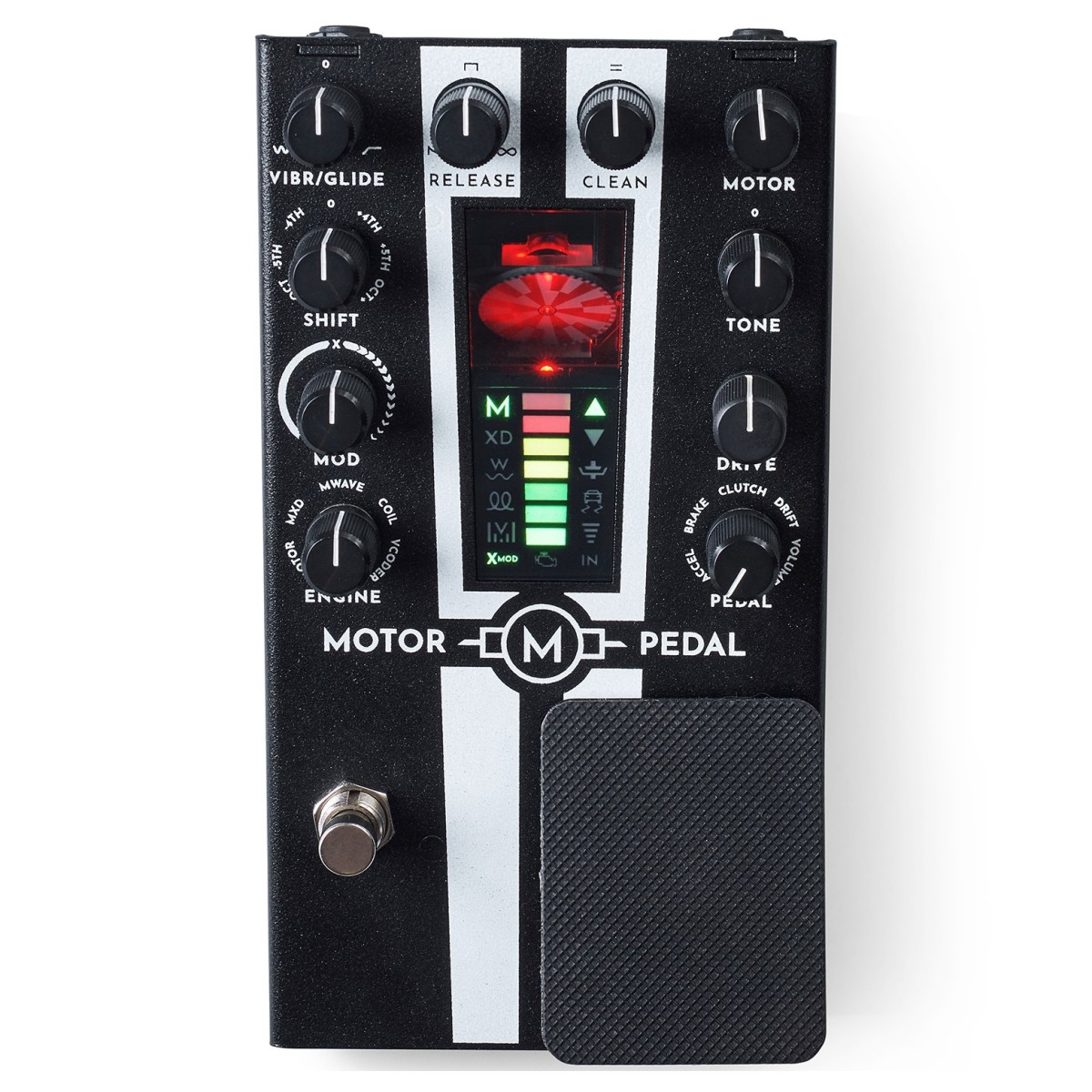

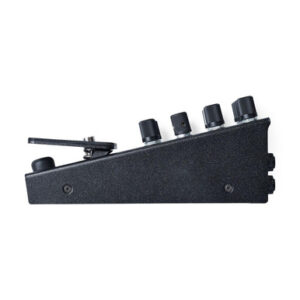
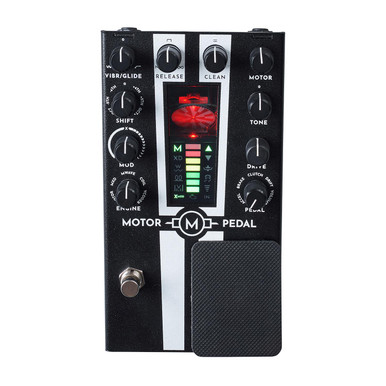
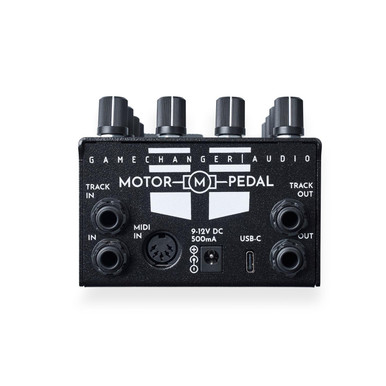
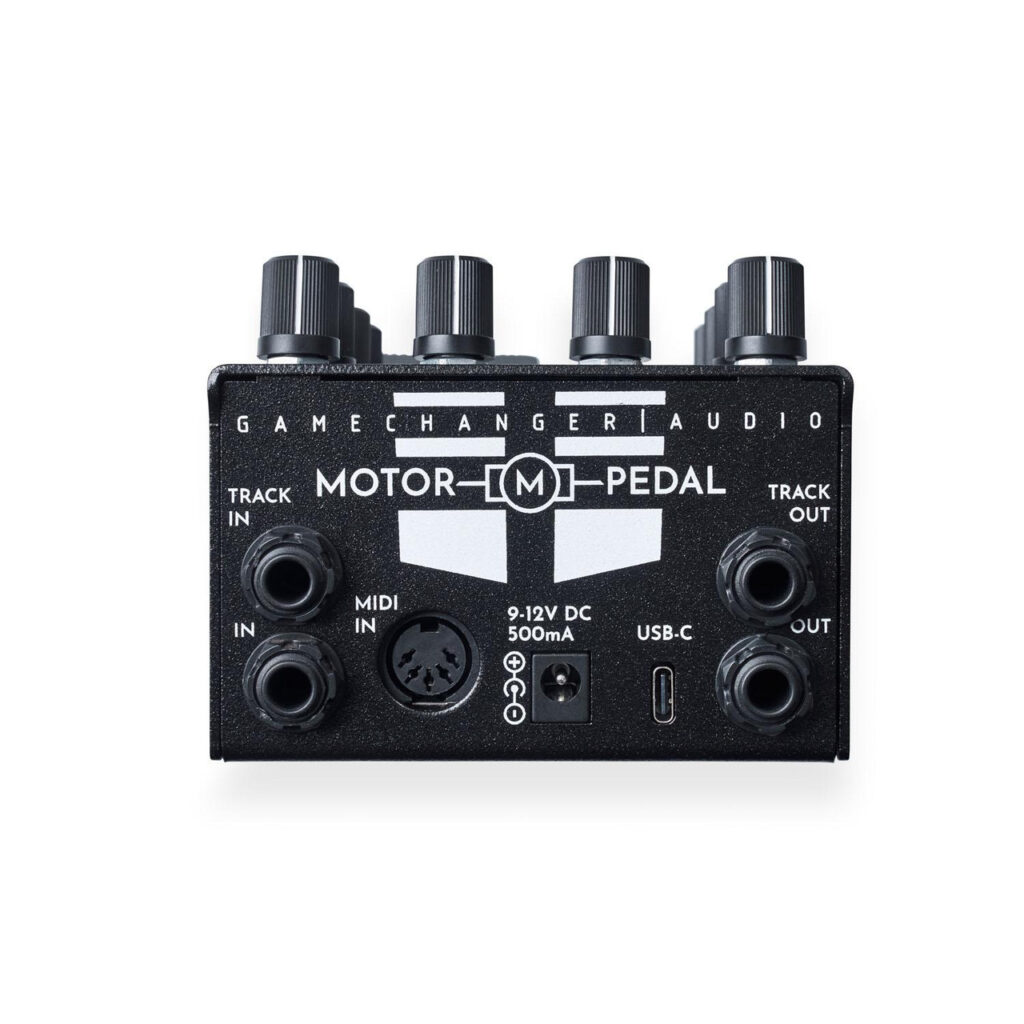
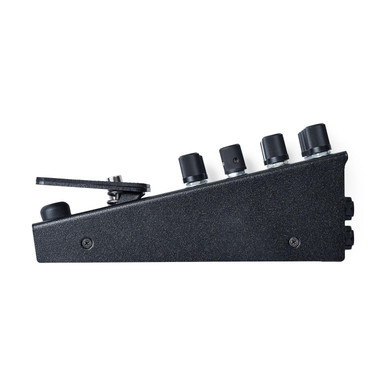
The MOTOR Pedal is a fully playable electro-mechanical synth voice that tracks your pitch in real time. Use it as a drone that doubles your lines, or as a ring-mod or cross-modulation engine for your signal. This isn’t an emulation or analogue modelling — this is the sound of a spinning brushed DC motor, pushed to the edge and tamed with precision control.
The MOTOR Pedal uses a real-time pitch tracker to analyze your instrument’s output. Whether you’re using a guitar, a bass, or a microphone, the motor’s rotational speed will precisely match the fundamental frequency you’re playing. For example, to match a 440Hz input, the motor will rotate at 146 revolutions per second, activating the magnetic pickup and sensors three times per rotation.
A carefully calibrated inductor captures the real-world motion of the motor’s spinning coils, transforming mechanical energy into a raw, electric audio signal.
Key Features
- A fully playable electro-mechanical synth voice that tracks the pitch of your playing in real time.
- A real sound source of a real electromotor that spins “in pitch”.
- Innovative expression foot pedal with standard and floor-it ranges and selectable modes of accelerate brake, clutch, volume swells, and drift.
- Five engine modes to select between: magnetic pickup, cross-mod, multitimbral, resonant, and vocoder.
- Track in, track out, and MIDI functionality to source the signal from anywhere in the signal chain.
Controls
The MOTOR Pedal’s unique features and modes allow you to use it for much more than a simple synth voice:
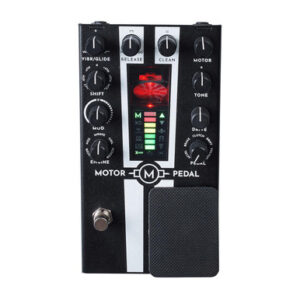
- FOOT PEDAL – An innovative foot pedal with normal and floor-it ranges, and five unique pedal modes.
- MOTOR – Raw electromagnetic pickup of the spinning coils. Glitchy, growling, magnetic.
- MXD – Cross-modulation of the motor with a digital waveform, creating harsh, distorted, and metallic textures.
- M-WAVE – A digital oscillator that’s pitch-locked and hard-synced to the motor’s output. A multitimbral synth with an imperfect mechanical soul.
- COIL MODE – Instead of spinning the motor with DC voltage, this mode injects alternating current into the motor’s coils to create resonant analogue vibrations and metallic hums. This innovative synthesis method sounds like nostalgia on steroids.
- VOCODER MODE – A 24-band digital vocoder that uses the motor’s output as the carrier and your instrument’s signal as the modulator. Speak, sing, or shred directly through the machine.
- ANALOG TONE BOOST – A powerful tilt equaliser for shaping the motor output.
- TWO VOLUME KNOBS – Independent volume control for the dry signal and motor output.
- MOTOR DRIVE – Heavy analogue distortion for the motor output.
- ENVELOPE – Go from short, punctuated stabs to an envelope follower to long releases.
- GLIDE – Applies a portamento curve to the motor engine.
- VIBRATO – Classic pitch modulation, from subtle movement to wild oscillation.
- MOTOR INTERVAL SELECTOR – Allows you to offset the motor pitch by +/- 1 octave or perfect fifths or fourths.
- X-MOD MODE – Use amplitude modulation to cross-modulate the input signal with all motor engines.
- ACCELERATOR – Create a wide range of controlled pitch shifts, or “floor it” to redline the motor.
- BRAKE – Downward pitch shift, or mash the pedal to bring the motor to a stall.
- CLUTCH – Temporarily disconnect the motor from the pitch tracker—perfect for creating drones.
- VOLUME – Use the spring-loaded pedal to create satisfying volume swells.
- DRIFT – Play the pedal like a gentle vibrato arm, or just “floor it” to get a complete wipeout.
The MOTOR Pedal uses a specially-designed brushed DC electromotor block as its core sound engine. Over time, the motor’s brushes are going to erode, and the motor block will need to be replaced – indicated by the pedal’s check engine light turning orange and then red. The motor block is a replaceable part with an estimated lifespan of 3,000–5,000 hours of intensive playing. Installing a replacement motor is comparable to changing a set of tubes in your amp.
Specifications
Connections
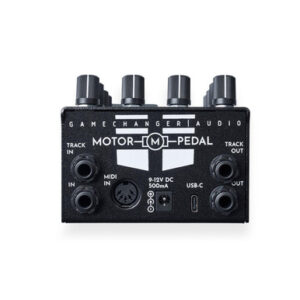
- IN MONO: 6.35mm (1/4’’) TS socket
- TRACK IN: 6.35mm (1/4’’) TS socket
- MIDI IN: MIDI 5 PIN DIN cable input
- OUT MONO: 6.35mm (1/4’’) TS socket
- TRACK OUT: 6.35mm (1/4’’)TS socket
- USB-C: MIDI & Firmware update
Sound
- Source: Built-in analogue signal multiplier (X-mod) and 5 MOTOR synthesis modes
- ENGINE: MOTOR, MxD, MWAVE, COIL, VOCODER
- MOD: Waveshaping, timbre and analog signal multiplier depth
- SHIFT: -Oct, -5th, -4th, 0, +4th, +5th, +Oct
- VIBR / GLIDE: Max vibrato: +/-100c, max glide: 5
- RELEASE: 200ms to infinite
- DRIVE: Analogue hard-clipping drive circuit
- TONE: Analogue tilt boost/cut EQ, Fc=300Hz, +/-6dB
- CLEAN: Analogue CLEAN channel volume mixer
- MOTOR: Analogue MOTOR channel volume mixer
- Expression: Built-in spring-loaded expression “accelerator” pedal
- PEDAL: ACCEL, BRAKE, CLUTCH, DRIFT, VOLUME
Indication
- MOTOR DISC LED:Red LED shining on disc indicating effect on/off
- ENGINE LED bar: Indicates selected ENGINE
- REV LED bar: Indicates current motor RPM (in COIL mode: pitch)
- PEDAL MODE LED bar: Indicates built-in expression pedal mode
- X-MOD LED: Green when MOD knob is on the right side. White when receiving a signal
- ENGINE LED: Motor module health status
- IN LED: Green when receiving an input signal. Blue when receiving MIDI input
Signal specification
- IN / OUT / TRACK IN / TRACK OUT: 4Vpp max
- Audio Input impedance: 500 kOhm
- Audio Output impedance: 100 Ohm
Motor System
- Motor Module Assembly Type: 030 brushed DC motor, encoder and pickup assembly -GCA partname: MMB1
- Min speed: 400 rpm (20Hz)
- Max speed: Range 26000 … 42000 rpm (1300Hz … 2100Hz) depending on power supply (9V 500mA … 9V 1A)
Other
- DC Power input: Centre negative 9-12 V, Minimum 500 mA, 2.1 x 5.5 mm plug
- Product Dimensions (with Knobs): 18 x 10 x 8 (cm) / 7.1″ x 4″ x3.2″ (L x W x H)
- Product Weight: 1.07kg / 2.4lbs